


The Podcast that never came to be
- Nov 15, 2024
- 2 min read
Updated: Jan 13, 2025


SETTING THE STUDIO: Emma Vowles setting up the microphones, whilst I got to grips with the mixing desk. The Soundhouse, Falmouth University Woodlane Campus.
Once The Mouth had been launched, a few of us wanted to experiment with an alternative form of storytelling. Podcasting has steadily grown in popularity, particularly in news and current affairs. Ofcom research found that ‘of those people who listen to podcasts at least once a month, a fifth say they listen to news and current affairs podcasts daily – the highest daily percentage of any genre’. Prominent examples include ‘Today in Focus’ (The Guardian), ‘The Daily’ (The New York Times), and ‘Newscast’ (BBC).
This indicated that podcasting could be a worthwhile diversification for The Mouth’s content. Alongside Will Maughan and Emma Vowles, this idea developed into a collaborative podcast episode discussing the experience of students who commute to campus.
We used the recently announced increase to bus fares as a topical peg, but explored all elements of commuting, from transport to time management. We also discussed statistics about the demographics of commuting students, who are more likely to be mature students or employed alongside their studies, and how these factors may intersect.
Rather than being strictly scripted, we collated research and key ideas to act as talking points. It was only decided on the day that I would act as the presenter and that my role would be to weave together a narrative of discussion.


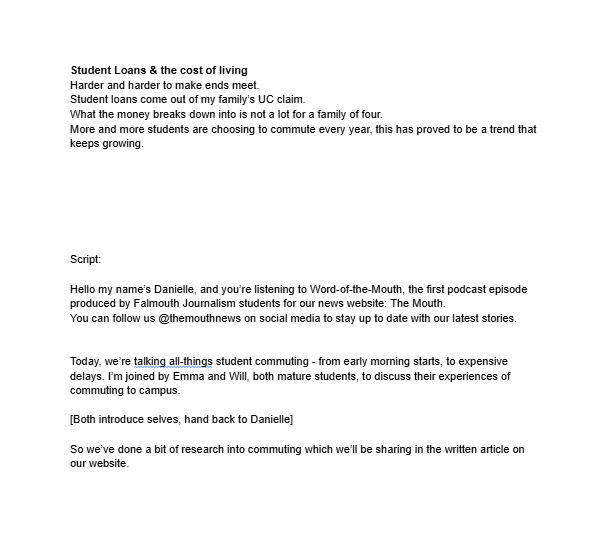
TALKING POINTS: Rather than being strictly scripted, we collated research and key ideas about student commuting to act as talking points.
I was also keen to promote the social media channels that were launched the week before, so wrote some quick links to signpost our listeners to our new platforms which can be heard below.
CHECK OUT OUR SOCIALS: Audio clip from our podcast, promoting The Mouth website and new social media accounts.
Ultimately, all of us had other stories that we wanted to pursue, which meant that the podcast never made it to the final stages of production. In future, it would be beneficial to have a clearer idea of what we wanted our final piece to look like and who would be responsible for which elements of the edit, but it was still a useful exercise in audio journalism which we'll be expanding on in our next module.


Comments